
colonial conditioning
lost notes: I

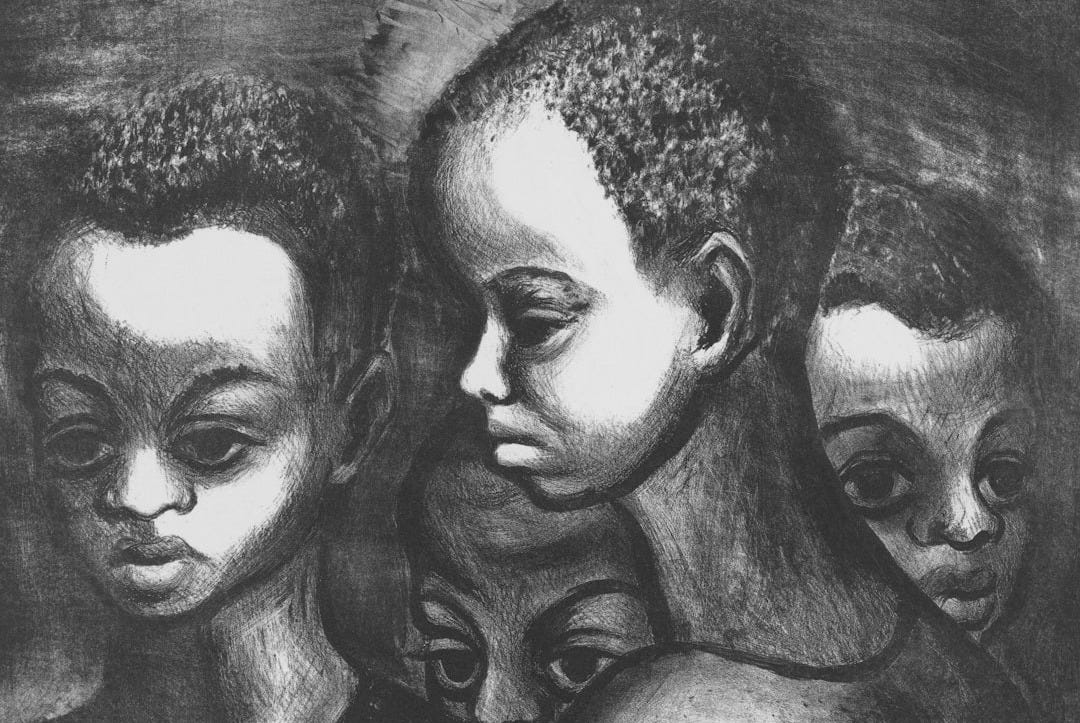
I have been thinking about how much of what we call “ourselves” was chosen by us, and how much was quietly handed down before we ever had the language to question it. How a person learns to see themselves through the eyes of others long before they ever see who they truly are. Growing up in the township, post-apartheid South Africa, I often thought freedom meant having options, what to wear, how to speak, where to go. Yet as I got older, I started noticing that the options themselves were already arranged. Even my dreams came pre-packaged, framed by what the world said was possible for someone who looked like me, who spoke like me, who came from where I did.
Colonial conditioning does not end when the flag changes or when the anthem shifts a tune, it is not a distant event buried in history books or statues; it is a living architecture inside the mind. It lingers in language, in aspiration, in the way we define what is beautiful and valuable. It rearranges perception until one begins to doubt one’s own worth without knowing why. It whispers that gentleness in Blackness must be moderated for the comfort of others. The most dangerous part is that it convinces the victim to become its guardian.
The tragedy of conditioning is not only what it makes us believe about others, but what it makes us believe about ourselves. Many of us are still trying to unlearn the idea that our origins are something to escape rather than something to understand. Slow unwinding that reshaped identity by convincing the oppressed that imitation was progress. The effect is subtle, like a shadow that adjust its shape to your movement, never fully gone, never quite your own.
Walking through modern South Africa surrounded by advertisements of possibility, but that opportunity asks you to fit a certain image: not too angry, not too assertive, not too loud, not too Black, to measure intelligence by the accent of English we can summon. To belong, you must polish your difference until it gleams with acceptability. This is how a system sustains itself long after it has been legally dismantled. The psychology of restraint. As, Steve Biko once explored, “The basic tenet of black consciousness is that the black man must reject all value systems that seek to make him a foreigner in the country of his birth and reduce his basic human dignity.” When you see yourself as inadequate, the mind obeys. When you reconstruct that image, your world begins to bend differently. For someone raised in the mental ruins of colonial design, the work is not only external – it is internal excavation.
Every generation inherits the task of sorting through the mental furniture left by the past. Some of it rotten, some of it is useful, and all of it heavy…